
Market Insights Trends 2026
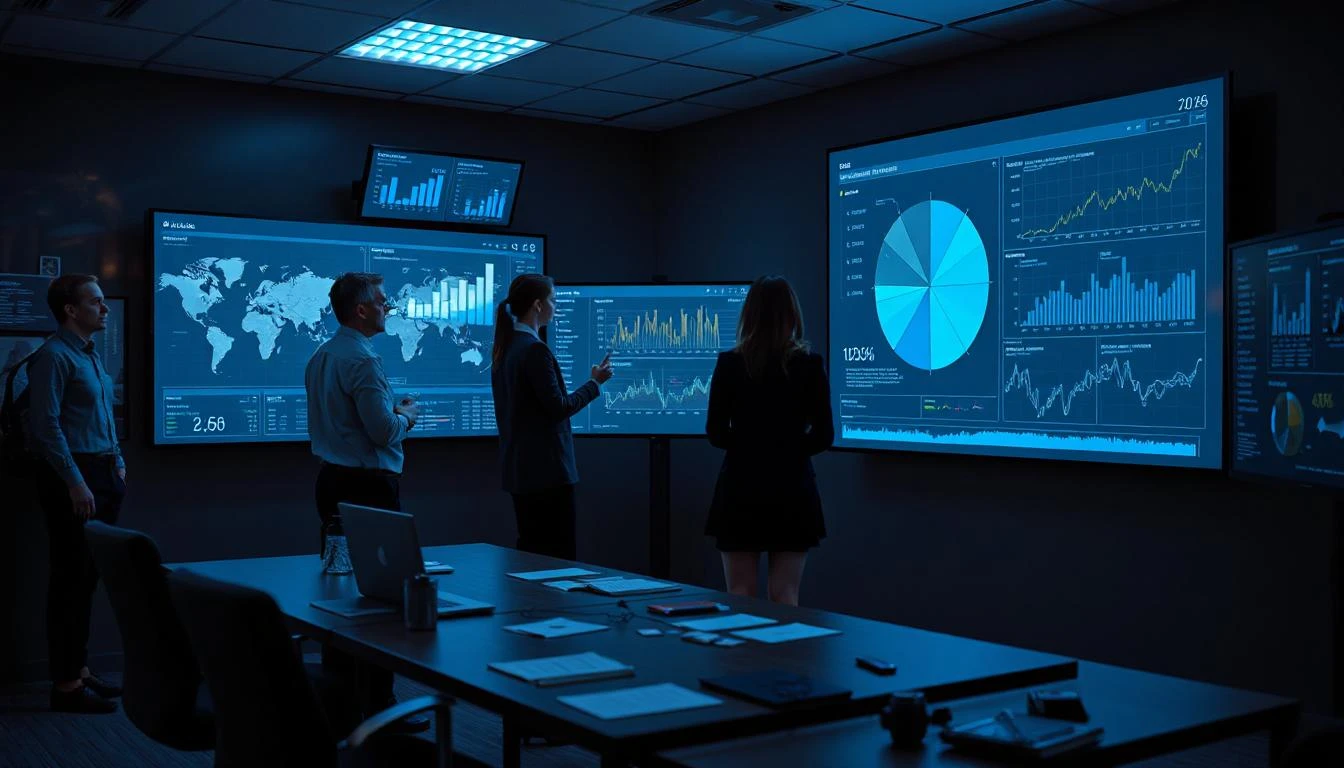
In today’s fast-moving digital economy, global markets are no longer shaped only by supply and demand but by invisible behavioral signals that shift every second. Brands, investors, and analysts are constantly trying to decode patterns hidden inside billions of micro-interactions happening across platforms, devices, and ecosystems.
The modern economy is being rebuilt around intelligence systems that read human intent like a map. At the center of this transformation is consumer behavior analysis, which determines how decisions are formed, delayed, or influenced in real time across global marketplaces.
Understanding Consumer Behavior Changes
Markets in 2026 are no longer predictable in a traditional sense. They behave more like adaptive ecosystems shaped by emotion, technology, and cultural acceleration. Understanding these shifts requires observing not just what people buy, but how their expectations evolve within seconds of exposure to digital stimuli.
The real transformation lies in how attention is earned and lost in fragmented digital environments. Every click, scroll, and hesitation carries meaning, and businesses that fail to interpret these signals risk losing relevance in an increasingly competitive global landscape.
industry forecasting methods are becoming essential here, as organizations attempt to anticipate behavioral shifts before they fully materialize. These methods allow companies to connect historical patterns with real-time signals, creating a more dynamic understanding of future demand.
Digital purchasing preferences
Consumers today expect instant gratification, seamless navigation, and frictionless payment systems. Mobile commerce dominates decision-making, while voice search and AI-assisted shopping are rapidly becoming mainstream. People are no longer just searching for products, they expect products to find them through predictive systems.
Demand for personalized experiences
Personalization has evolved into behavioral precision. Every user expects curated journeys that feel uniquely tailored. Recommendation engines now analyze emotional triggers, not just browsing history, creating experiences that feel almost conversational in nature.
Sustainability focused buying decisions
Environmental awareness has shifted from niche concern to mainstream expectation. Consumers increasingly evaluate ethical sourcing, packaging sustainability, and brand transparency before making decisions. As Professor Michael Levinson of Stanford Business School states, “Modern consumers are not just buying products, they are buying responsibility embedded within those products.”
Data Driven Market Intelligence
Modern enterprises are shifting from intuition-based strategies to deeply analytical ecosystems where every decision is backed by behavioral intelligence. This transformation is powered by continuous data flow, machine learning models, and real-time interpretation of user activity.
In this environment, consumer behavior analysis becomes the backbone of strategic intelligence systems, helping organizations translate raw data into actionable insights that directly influence growth and competitiveness.
Predictive analytics adoption
Businesses are increasingly relying on predictive systems to forecast demand fluctuations and consumer intent. These models integrate historical datasets with real-time behavioral signals to create highly accurate projections of future market movements.
Real time customer feedback analysis
Feedback is no longer static or delayed. It is now captured instantly through social platforms, review systems, and in-app behavior tracking. Companies respond dynamically, adjusting strategies within hours based on live sentiment changes.
AI enhanced forecasting methods
AI-driven forecasting models are reshaping how industries predict outcomes. These systems identify hidden correlations in massive datasets that traditional analysis would miss, enabling businesses to anticipate shifts before competitors even detect them.
As Dr. Helen Carter from MIT Media Lab explains, “Data is no longer descriptive; it is predictive, and those who understand this shift control the direction of modern markets.”
Key Sectors Influencing Market Growth
Global economic expansion is now driven by sectors that integrate innovation, sustainability, and digital intelligence. These industries are not just growing, they are redefining the foundation of global commerce.
The interplay between technology, healthcare, and energy systems is creating new interconnected ecosystems where decisions in one sector influence outcomes across others.
Technology and innovation markets
The technology sector continues to lead global transformation through AI systems, automation, and advanced computing infrastructures. Digital ecosystems are expanding rapidly, influencing everything from communication to financial transactions.
Healthcare industry expansion
Healthcare is becoming increasingly data-driven, with telemedicine and AI diagnostics reshaping patient care. Behavioral insights are helping medical providers understand patient adherence patterns and optimize treatment outcomes.
Renewable energy investment trends
Renewable energy is experiencing unprecedented investment growth as governments and corporations shift toward sustainability. Solar, wind, and hybrid systems are becoming central pillars of future infrastructure planning.
Discover Actionable Market Insights for Growth
In a competitive global environment, insights alone are not enough. The real advantage comes from transforming data into immediate, strategic action that influences market positioning and long-term sustainability.
Businesses that master behavioral intelligence gain the ability to anticipate change rather than react to it, giving them a significant edge in volatile environments.
Monitoring emerging opportunities
Companies are leveraging behavioral tracking tools to identify rising demand trends before they reach mainstream awareness. This allows early entry into high-growth segments and underserved markets.
Strengthening competitive positioning
Competitive analysis now integrates AI-driven benchmarking systems that compare pricing, sentiment, and engagement metrics across industries. This enables organizations to refine positioning strategies with precision.
Making informed strategic decisions
Decision-making is now deeply embedded in analytics ecosystems that merge financial, behavioral, and operational data. This creates a unified view of market dynamics that supports smarter long-term planning.
The future belongs to those who can interpret signals faster than the market evolves, turning complexity into clarity and uncertainty into opportunity.
Market Intelligence in a Connected Global Economy
The global marketplace is becoming a single interconnected system where behavior in one region can instantly influence trends worldwide. Understanding these connections requires a deeper interpretation of behavioral signals and predictive systems that continuously evolve with consumer expectations.
As consumer behavior analysis continues to evolve, it reshapes how organizations approach strategy, innovation, and global expansion. The ability to read these patterns accurately is now one of the most valuable capabilities in modern business.
“Markets are no longer driven by products alone, but by the psychology of collective decision-making,” says Jonathan Reeves, Global Market Strategist at Harvard Business Review.
This shift signals a deeper transformation where data, psychology, and technology converge into a single decision-making framework.